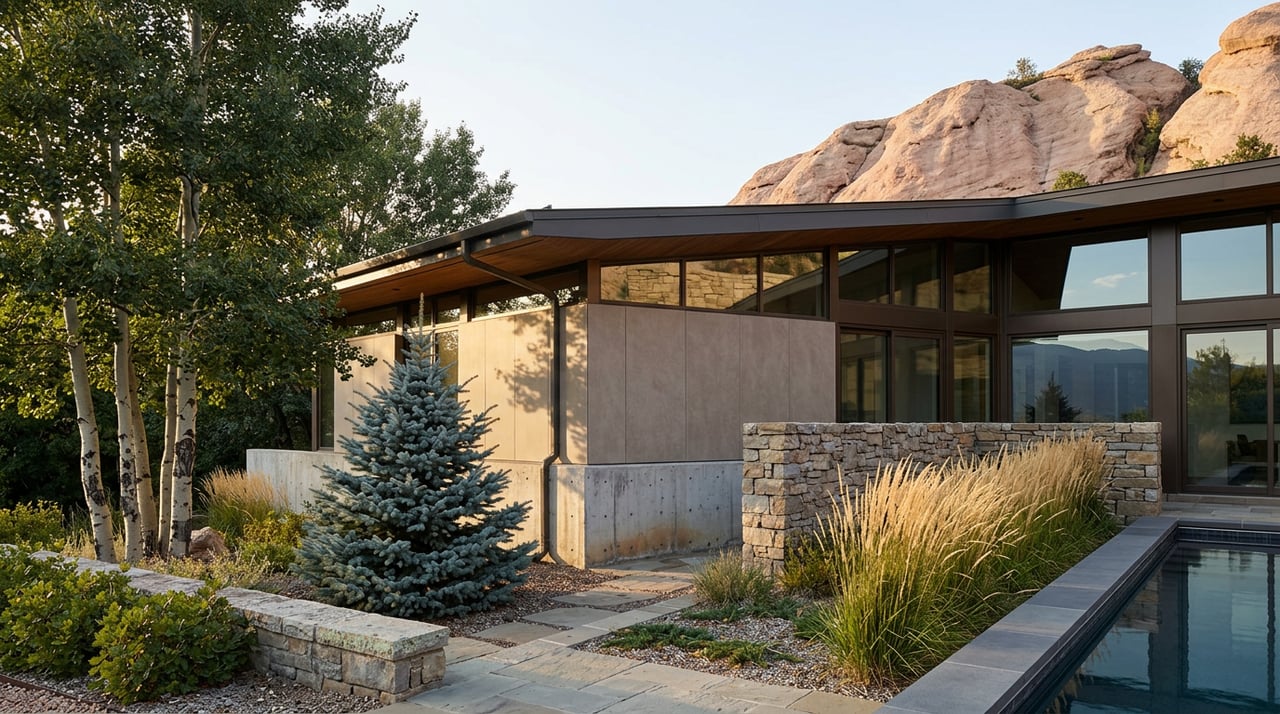
A buyer relocating to Boulder called last month with a screenshot of a cottage two doors from the Chautauqua Auditorium lawn. Wood siding, a deep porch, a view of the Flatirons that no amount of money usually buys outright. She wanted to tour it that week. The cottage wasn't for sale. It has never been for sale, and under the way Chautauqua actually works, it probably never will be.
That conversation happens often enough that it's worth explaining properly, because the confusion isn't the buyer's fault. It's built into how listing portals aggregate a neighborhood that doesn't behave like the rest of Boulder's housing stock. Most of what makes Chautauqua photogenic sits inside a structure that has nothing to do with a normal real estate transaction, and once you understand that structure, the wildly different median prices you'll find for "Chautauqua" on different sites stop looking like a data error and start looking like the actual story.
How Chautauqua's Land and Homes Are Structured
Chautauqua isn't one housing market. Its land, leased historic core, cottages, and surrounding neighborhoods fit together, but listings come from privately owned cottages and the surrounding private neighborhoods.
- The land itself is owned by the City of Boulder, which purchased roughly 80 acres in 1897 and has held the ground under Chautauqua ever since.
- The historic core, roughly 26 of those acres including the 1898 Auditorium, the Dining Hall, and most of the cottages, is leased long-term to the nonprofit Colorado Chautauqua Association. The current lease term traces back to negotiations the city began with the Association in 2015, succeeding an earlier 20-year lease that ran from 1998. The Association doesn't own the ground under its buildings. It operates on borrowed time, by design, and has for more than a century.
- The cottages themselves split further. Sources differ slightly on the exact count, the Association's own 125th-anniversary account puts the total at 99 cottages with roughly two-thirds owned by the Association and rented out as seasonal and off-season lodging, while an earlier accounting from the Colorado Encyclopedia lists 60 Association-owned cottages against 39 privately owned ones. Either way, the majority of cottages inside the historic core are not private property. They're the Association's rental inventory, and cottage rental income is described as the organization's primary source of revenue going back to the earliest years of the site.
That leaves a minority of cottages, somewhere between a third and 40 percent of the total, in the hands of private owners. Some are recent buyers who wanted a walk-to-everything foothold. Others are described by the Association itself as fifth, sixth, and seventh-generation descendants of the original 1898 Texas schoolteachers who founded the site, families who still make an annual trip back to Boulder and have no particular reason to sell.
Outside that 26-acre leased core sits the fourth piece of the puzzle, though it isn't part of the Landmark at all: the ordinary fee-simple neighborhoods that ring it. Lower Chautauqua, Chautauqua Heights, and the blocks bleeding into University Hill are regular private real estate, unrelated to the Association's lease, and this is where the actual volume of Chautauqua-area transactions happens.
Why the Median You're Seeing Doesn't Mean What You Think
Here's where the confusion turns into a real pricing distortion. Search "Chautauqua homes for sale" and you'll find median figures that don't agree with each other by a factor of three. One Boulder brokerage site pegged the Chautauqua subdivision median at approximately $1.1 million, with prices ranging from about $1 million to nearly $4 million, based on MLS data pulled in mid-June 2026. A national portal, working from the same broad geography, currently lists the Chautauqua median closer to $3.25 million.
Neither number is wrong. They're measuring different parts of the structure described above. A dataset that pulls in more of the smaller bungalows and older Tudor-style homes on the outer edges of the district produces a lower median. A dataset weighted toward the handful of large custom homes closest to the park, the ones that actually trade with any regularity, pulls the median higher. Because so little of the historic cottage row itself ever appears on the market, any given quarter's sales sample can be tiny and easily skewed by one large estate closing or one modest bungalow changing hands. A median built on a handful of transactions moves in ways a median built on hundreds of transactions never would.
The practical takeaway for a buyer isn't that one figure is fake. It's that a median for a neighborhood this small and this structurally split is close to meaningless without knowing which ring it's describing.
What Actually Trades, and What It Costs
When something in the private ring does come to market, the range is wide and the story behind each sale tends to matter more than the square footage.
A 1913 cottage near the McClintock Trailhead, listed with a $185,000 price cut after time on the market, shows what the entry point looks like when a buyer takes on original systems and a smaller footprint in exchange for walking distance to the trail network. At the other end, a recently completed Donohoe Builders home on a half-acre lot near the Auditorium, with interiors by Deidre Oliver of Oliver Designs, offers over 7,200 finished square feet, the kind of new-construction scale that almost never becomes available this close to the park. A restored 1900s-era structure known as the Bonnie View Cottage, expanded in 2020 while preserving its historic facade, sits in between, offered as a home that lives like new construction without losing its street presence.
At the top of the range, homes at the summit of Bellevue Drive, described in listing materials as one of Boulder's most exclusive residential streets, have been marketed with commanding, protected views across Chautauqua Park and the Flatirons, at price points reflecting the fact that homes of that scale and setting are no longer achievable to build in Boulder today.
What ties these together isn't square footage. It's that each one is fee-simple private property sitting adjacent to, but outside of, the Association's leased 26 acres. Buyers are paying for proximity to Chautauqua's character and its trail access, not for a piece of the Landmark's protected core itself. That distinction is worth confirming before you fall for a listing photo that happens to include the Auditorium roofline in the background.
The Festival Adding a New Layer of Demand
One more current factor is shaping how these private-ring homes are being marketed this year. Boulder is set to host its first Sundance Film Festival in 2027, and listing remarks on active Chautauqua-area properties are already referencing the festival's upcoming presence directly, a detail that would have meant nothing in past cycles.
The Association-owned cottages already function as short-term and seasonal rentals during the summer season, so that inventory isn't new to the visitor economy. What's new is that sellers of privately owned homes near the park are now marketing proximity to festival programming as a selling point, anticipating buyer interest from people who want to be a short walk from Auditorium events during the festival's Boulder run. It's a small signal for now, visible mainly in how individual listings are being written rather than in any published sales data, but it's worth watching if you're comparing offers on a home in this ring over the next year.
What to Ask Before You Tour
If a Chautauqua-area listing catches your eye, a few questions upfront will save you a wasted afternoon.
- Is the property inside the Association's 26-acre leased footprint, or in the surrounding private-ownership ring like Lower Chautauqua or Chautauqua Heights?
- Is the seller the actual private owner, or is this an Association-managed rental being mistakenly cross-listed?
- How many comparable sales exist in the same ring over the past 12 months, not the broader Chautauqua label?
- Does the home carry any deed restrictions tied to its historic status, separate from the Association's own lease obligations?
A quick call to the county assessor's property records, or to an agent who already knows which side of the boundary a given address sits on, answers all four in a few minutes.
FAQ
Can I buy one of the historic cottages near the Auditorium? Only if it's one of the minority privately owned cottages, and even then, turnover is rare. Most cottages inside the leased core belong to the Colorado Chautauqua Association and are rented seasonally rather than sold.
Why do median home prices for Chautauqua vary so much between sites? Different aggregators are pulling different mixes of the neighborhood's rings, from modest bungalows on the outer edge to large custom estates closest to the park, and the sample sizes involved are small enough that a single sale can swing the number.
Does buying a home near Chautauqua put me under any special lease or Association rules? Not if you're buying in the surrounding fee-simple neighborhoods like Lower Chautauqua or Chautauqua Heights. Those are ordinary private properties outside the Association's 26-acre leased footprint. Confirm this distinction for any specific address before writing an offer.
Will Sundance's move to Boulder affect resale value in this area? It's too early to say with sales data, but current listing language for homes near the park is already citing the festival's 2027 debut as a draw, which suggests sellers expect it to matter to buyers.
If you're weighing a home near Chautauqua against other Boulder neighborhoods, or trying to figure out which ring a specific listing actually falls into, Marybeth Emerson can walk the boundary lines with you before you fall for a view that isn't attached to the address you think it is. Schedule a Consultation to get the full picture before you tour.
This article is general information, not legal, tax or financial advice. Consult a qualified professional about your situation.