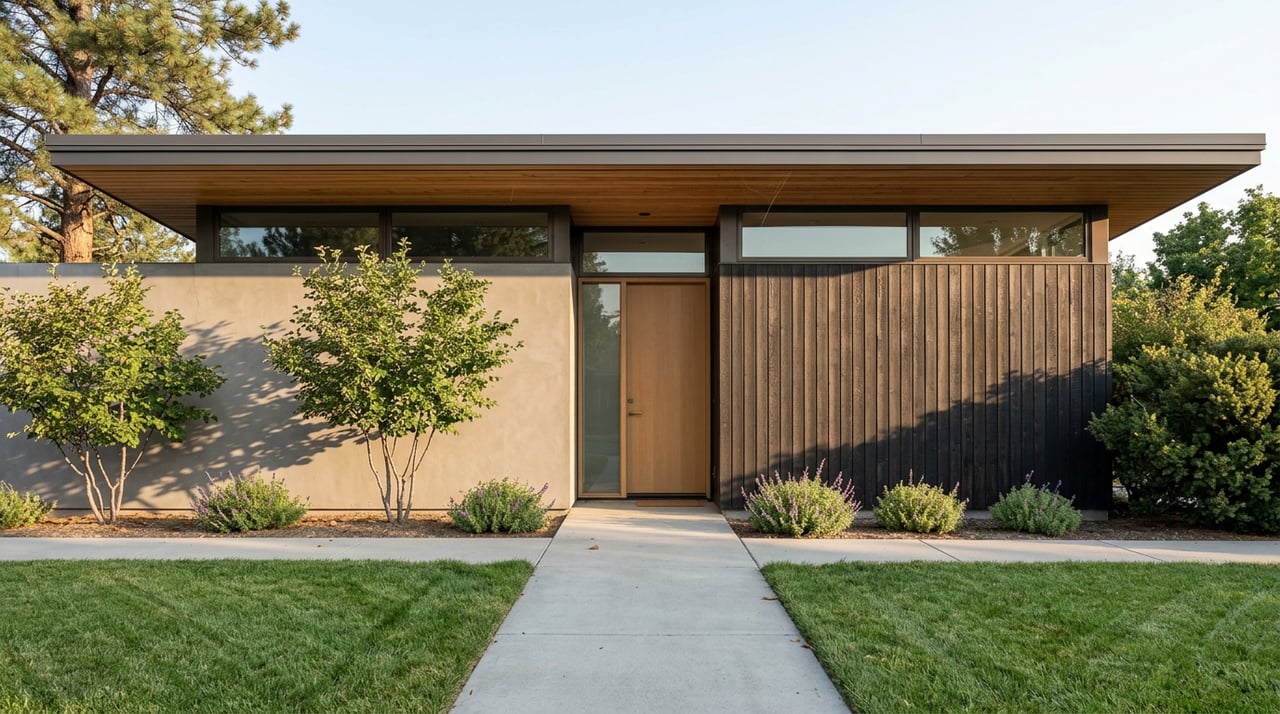
Two identical-looking 1920s cottages, both a short walk from Main Street or Public Road, can travel to closing on very different rails. The difference is rarely the roof, the foundation report, or the appraisal. It is a single line on a state form, one that Old Town sellers routinely skim and Old Town buyers routinely find out about after inspection objection is already on the calendar.
Louisville and Lafayette were built on coal before they were built on anything else, and the workings did not disappear when the mines closed. U.S. Geological Survey maps show abandoned coal mine workings 50 to 150 feet deep under swaths of Lafayette, Louisville, Erie, Frederick, and Firestone. That geology reaches the contract in a very specific place, and the seller who understands it controls a variable the buyer's inspector is otherwise going to raise first.
The Line on SPD19 Most Sellers Skim
The Seller's Property Disclosure (Residential) form promulgated by the Colorado Real Estate Commission was updated for use on or after January 1, 2026. Under the general and environmental sections, sellers are asked about geological hazards, soil movement, mine shafts, and landfill locations, alongside radon, flooding, and structural conditions.
The form is answered to what the Commission calls "current actual knowledge." The very beginning of the form states that the seller's information is correct to current actual knowledge as of the date signed, and in explaining this, it should be clear that the seller could not disclose what they do not know; current actual knowledge is simply "as far as the seller knows." That standard sounds forgiving, and in isolation it is. It becomes less forgiving when a seller has lived in an Old Town home for two decades, watched a hairline crack open above a doorframe, and never asked what sits underneath the block.
Seller's failure to disclose a known adverse material fact affecting the property or occupant may result in legal liability, and if the seller has knowledge of an adverse material fact, it must be disclosed whether there is a specific item on the SPD or not. Colorado's underlying statutory duty runs through C.R.S. § 38-35.7, which frames the disclosure conversation for every residential transaction in the state.
The practical translation: on a home sitting over a documented mine, "I don't know" is a defensible answer only until it isn't. A prior repair invoice, an old letter from a neighbor, a foundation crack noted on the last purchase, any of these can turn skimmed silence into a post-closing problem.
What Sits Under Old Town, and Where the Maps Live
The Colorado Division of Reclamation, Mining and Safety publishes area-specific maps that overlay historic workings against current parcels. Anyone can pull the Louisville Area Map, the Lafayette Area Map, or the Tri-Towns Area Map and see whether a specific address sits over a room-and-pillar grid or clear of one.
Reading the map takes about ten minutes. The interpretation is harder. There was little uniformity in how mining was done, making it difficult to evaluate the severity or timing of a room's collapse; entries were roughly 15 feet wide and led to a grid of pillars and rooms that could be 80 to 90 feet long, with pillars 20 to 30 feet wide and rooms 10 to 12 feet wide that would become twice that width as coal in the pillars was mined away. The maps also carry their own uncertainty. Natural caving and flooding have made accessing these underground workings now to map them impossible, and predicting future subsidence events is "extremely difficult," according to the Department of Natural Resources homeowner guidebook.
The Colorado Geological Survey's Special Publication 26, Subsidence Above Inactive Coal Mines: Information for the Homeowner, is the plain-English companion to the map layer. It is the document every listing agent in these two towns should know exists, and every buyer's agent should send along with the SPD.
Why Homeowners Insurance Doesn't Help
The insurance side is where the deal usually stalls. Conventional homeowners insurance won't cover the damage, and in fact no insurance coverage designed specifically to address damage due to mine subsidence is currently available; most homeowners' policies specifically exclude subsidence events. A buyer who asks their broker for a rider will not get one from the private market in any straightforward way.
What exists instead is a state trust. The Colorado Mine Subsidence Protection Program was seeded with federal money and is administered by DRMS. The details that matter at the contract stage:
| MSPP feature | What the file says |
|---|---|
| Coverage cap | Up to $100,000 per occurrence, up to the value of the home |
| First-year enrollment fee | $235.00, which includes a $200.00 inspection fee |
| Renewal fee | $35.00 per year, waived after three consecutive years of payment as long as the original participant owns the property |
| Eligibility window | Houses built before 1989, when the Surface Mining Control and Reclamation Act of 1977 took effect |
| Enrollment rate | An estimated 7,500 houses and 25,000 people in Colorado live in at-risk homes, with roughly 950 enrolled |
The last line is the interesting one. A program that costs less than a monthly streaming bundle after year three covers roughly one in eight eligible households. That gap is a market inefficiency, and it is where an informed seller creates leverage.
The Re-Trade Pattern
Here is the sequence brokers see three or four times a year on Old Town blocks. The listing goes live. The buyer's inspector notes hairline foundation cracks or a slightly out-of-plumb doorframe, common in ninety-year-old cottages regardless of what lies below. The buyer's agent pulls the DRMS map, sees the workings, and files an inspection objection framed around "subsidence risk." The seller, who checked "no" on soil movement and mine shafts to current actual knowledge, is now defending a form answer instead of negotiating a repair credit.
The concession that follows is almost never proportional to the actual risk. It is proportional to the surprise. A seller who addressed the coal question in the listing packet, ideally with an active MSPP enrollment already in hand, is negotiating a different transaction. The buyer's inspector still finds the crack, but the crack now has a documented protection wrapper around it, and the objection has nowhere to escalate.
That reframing is the reason to run the disclosure work before listing rather than after inspection.
A Pre-Listing Sequence That Removes the Surprise
- Pull the DRMS area map for the specific address. Note whether workings are shown, and at what mapped depth.
- Order Special Publication 26 and read the sections on identifying subsidence damage and existing structures. This is the vocabulary the buyer's inspector will use.
- For any pre-1989 home over documented workings, price out MSPP enrollment. The $235 first-year outlay buys documentation the listing agent can attach to the SPD and reference in remarks.
- Answer SPD19 honestly and specifically. If a prior owner disclosed anything on the last sale, the current seller's "no" is harder to defend.
- Photograph any settlement cracks before listing and get a licensed structural engineer's letter if warranted. A written opinion is a cheaper document than a re-trade.
For Buyers Under Contract
- Pull the DRMS map before the inspection objection deadline, not after. The information is free and public.
- Ask specifically whether the seller has ever enrolled in MSPP. Enrollment is transferable and adds real value at closing.
- Understand that residents of Colorado living in homes built after 1997 are not eligible for coverage under the private mine-subsidence path, which narrows options on newer infill construction over mapped workings.
- Weigh the risk against the broader Louisville market context, which as of June 2026 was still moving at a measured pace with a median list price near $870,000 and roughly 40 days on market. A well-priced Old Town home is not sitting long enough to reward a slow buyer.
- Read Boulder Weekly's No Solid Ground reporting on the enrollment gap. It is the clearest local journalism on why so few eligible homeowners participate.
FAQ
Does the coal history show up on every Old Town parcel?
No. The DRMS maps are parcel-specific, and blocks a few streets apart can sit over very different geology. This is one of the few questions in a Louisville or Lafayette purchase where the answer is genuinely binary and genuinely public.
If a home is not eligible for MSPP, is it uninsurable?
The home is insurable through normal channels. What is unavailable is coverage for the specific peril of subsidence. Buyers of post-1989 or post-1997 construction over mapped workings should factor that gap into their offer, not their loan application.
Is subsidence disclosure the same as radon or flood disclosure?
The SPD19 treats them in adjacent sections, but the diligence path is different. Radon has a test. Flood has a FEMA map and a policy market. Subsidence has a state trust program with modest enrollment and a public workings map. It rewards a broker who knows where the maps live.
Does an active mine-subsidence claim history reduce value?
There is no clean local dataset on this. What is observable is that homes marketed with an in-force MSPP policy tend to move through inspection more cleanly than homes without one, because the buyer's downside is capped by the trust rather than open-ended.
Coal is not a footnote in Old Town Louisville or Old Town Lafayette. It is a line item on a state form, a map layer at DRMS, and a $235 decision most sellers never learn to make. If you are preparing to list a home in either Old Town, or writing an offer on one this summer, Marybeth Emerson can walk the parcel, the map, and the disclosure packet with you before the inspection clock starts. Schedule a Consultation.