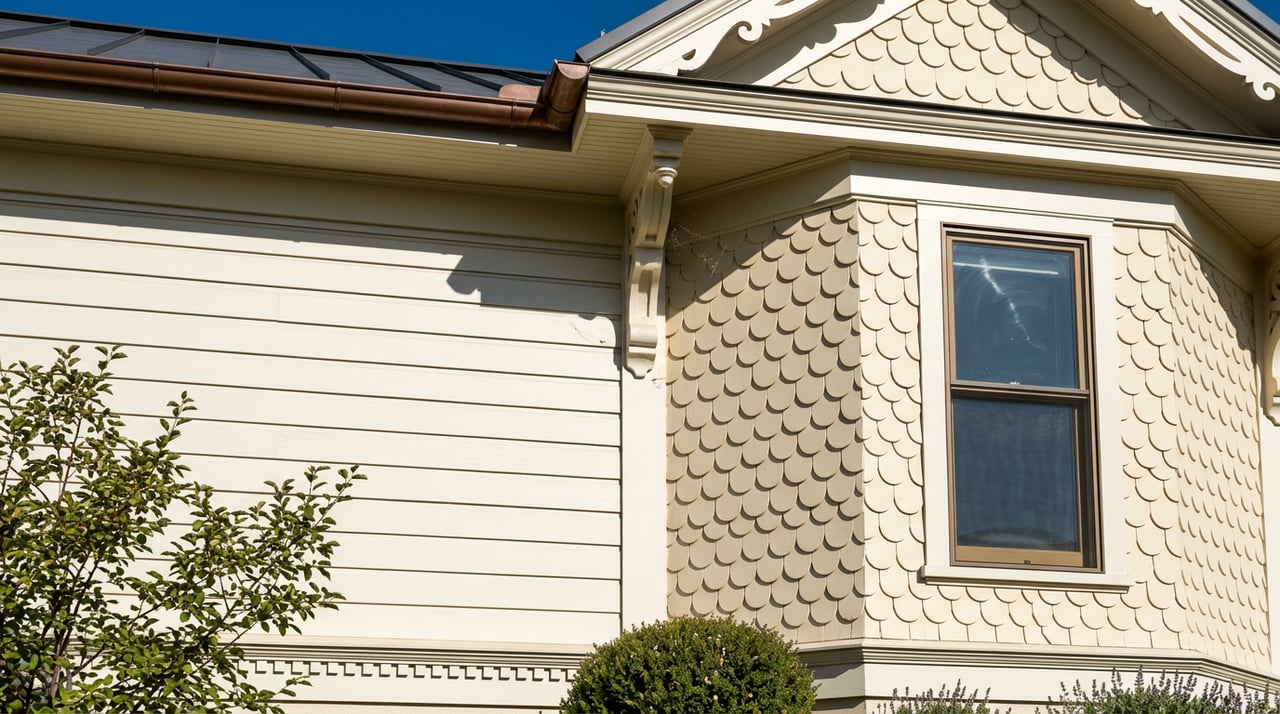
Two homes on the same Mapleton Hill block can trade for radically different prices per square foot, and the reason is rarely visible in a listing photo. It sits in a city file: whether the property is contributing to the historic district, non-contributing, or individually landmarked. That single designation quietly governs your renovation timeline, your material choices, your access to state tax credits, and the pool of buyers who will eventually take the home off your hands.
If you have already scrolled the portals, you know the headline numbers. What follows is the mechanism underneath them, written for buyers deciding whether Mapleton Hill is the right place to spend a Boulder-scale budget.
The transaction friction most buyers meet too late
The moment you close on a Mapleton Hill home, you inherit a review process. A Landmark Alteration Certificate is required for all exterior changes to a property designated as an individual landmark or located within a historic district. The definition of "exterior change" is broader than most out-of-state buyers expect. The most common LAC types are re-roofing, repainting, mechanical equipment, fences, additions and solar panels. An LAC is not required for landscaping but is required for paving and hardscaping and the removal of mature trees.
The timeline is the part that catches people off guard. For applications approved at the staff or LDRC level in one round of review, the process takes between 2 to 4 weeks. Expect an additional 2 to 3 weeks for each subsequent round of review. For applications reviewed by the Landmarks Board, the process takes between 6 weeks and 3 months. LAC approvals are valid for one year and cannot be extended.
Read that last sentence twice. If you buy in April, secure LAC approval in September, and let the year lapse while your architect finishes construction documents, you start over. The friction is not the review itself. It is the mismatch between a one-year approval window and the pace at which a serious restoration actually assembles bids, permits, and a contractor calendar in Boulder.
The written standards for that review are codified. The review criteria in Section 9-11-18(b) of the Boulder Revised Code require that the proposed work preserves, enhances, or restores, and does not damage or destroy the exterior architectural features of the landmark or the subject property within a historic district; that it does not adversely affect the special character or special historic, architectural, or aesthetic interest or value of the district; and that architectural style, arrangement, texture, color, and materials are compatible with the character of the existing landmark and its site or the historic district. "Compatible" is where architects earn their fee.
Contributing, non-contributing, landmarked: three prices for one address
Mapleton Hill contains three categories of property, and the price per square foot moves with the category as much as with the finish level.
| Status | What review looks like | Practical effect on value |
|---|---|---|
| Individually landmarked | Highest scrutiny on exterior changes | Access to state tax credits; strictest material rules |
| Contributing to the district | Full LAC review under district guidelines | Access to state tax credits; character-defining features must be preserved |
| Non-contributing in the district | LAC still required, but latitude on style | Widest design flexibility inside the district lines |
Recent Landmarks Board dockets show how the categories play out on real addresses. In one hearing, the board considered a Landmark Alteration Certificate to construct a new two-story building, construct a rear addition to the primary building, and modify an existing accessory building at 1105 Spruce St., a contributing property in the Mapleton Hill Historic District. In the same session, the board reviewed a Landmark Alteration Certificate to demolish an existing c. 1990s accessory building, construct a new 1½ story, two-car garage, and remodel the existing house at 432 Concord Ave., a non-contributing property in the Mapleton Hill Historic District.
Same district. Same board. Different constraints, different scopes, different budgets. A buyer choosing between two Mapleton Hill listings should always ask which category the property occupies before comparing them on price per foot.
The 20% credit that quietly rewrites the math
Preservation constraints get discussed. The offsetting incentive does not, and it changes the calculus for anyone budgeting a restoration.
Colorado offers a 20 percent state income tax credit on qualified rehabilitation costs for local landmarks and contributing buildings in local historic districts. The credit is capped at $50,000 per property and can be spread over a 10-year period. Critically, this is a direct credit against tax owed, not a deduction. Boulder layers a second incentive on top. A waiver of city sales tax on construction materials is available when applying for a building permit, if at least 30 percent of the value of materials is for the building's exterior. The waiver application form must include an approved Landmark Alteration Certificate application approving the work.
A $200,000 exterior-heavy restoration of a contributing Mapleton Hill home can generate up to $40,000 in state income tax credit, plus the Boulder construction sales-tax waiver on qualifying materials. A non-contributing property in the same district gets the LAC review without the state credit. Same block, different math.
The credit requires the work to meet the Secretary of the Interior's Standards for Rehabilitation. That is not a hurdle so much as a design brief. Buyers who plan to strip original windows, swap the porch, or clad the facade in something the block has never seen will not qualify. Buyers who want to restore what is already there will find the incentive substantial.
What the $18M March sale actually tells you
Mapleton Hill's headline transaction of the year illustrates why a single median can mislead. In March 2026, the historic 700 Highland Ave. sold for almost $18 million; the 10,060-square-foot property closed on March 10 for $17,996,428 according to Boulder County property records. The property on a triangular lot was originally built in 1898 as a Seventh-Day Adventist Church, later used as a Baptist Bible Church before being converted into a luxury 6-bedroom, 7-bathroom residential home, built in a Queen Anne-Romanesque architectural style. It last sold in November 2015 for $4.9 million.
Layer that against the wider market. Redfin data for March 2026 pegged the Mapleton Hill median sale price at $2,225,000, up 20.3% year over year, while in February, the median sales price of single-family homes in Boulder was $1.54 million, down 18.7% from February 2025.
Two readings, both correct. On the surface, Mapleton Hill looks like it is decoupling from the broader Boulder market. Beneath the surface, thin inventory at the top of the district means a handful of exceptional sales pull the median. The buyer's actionable takeaway is not "Mapleton Hill is up 20 percent." It is that the district trades on individually distinct assets whose values are set less by comparable sales than by irreplaceability, off-market access, and the credibility of the buyer's renovation plan under LAC review.
Reading a Mapleton Hill listing through the district lens
Once the mechanism is visible, the way you read a listing changes.
- A porch labeled "original" is a value driver only if the standards for its preservation are already understood by the sellers. Ripping it out later is neither cheap nor guaranteed to clear the Landmarks Board.
- A recent addition on a contributing property carries a paper trail. Ask for the LAC file. If the sellers renovated without one, the exposure transfers to you.
- Solar panels, HVAC condensers, and metal roofs all trigger review. On a home marketed as "restoration ready," treat the mechanical wish list as a scope of work with a Landmarks Board component.
- A non-contributing home inside the district lines is often the pragmatic buy for a family that wants Pearl Street walkability with modern design freedom. The lot is worth Mapleton money; the design vocabulary is closer to a North Boulder new build.
Location still matters on its own terms. Mapleton Hill sits within a 5 to 15 minute walk to Pearl Street Mall depending on your location within the neighborhood, one of Boulder's most walkable addresses where you can reach downtown restaurants, shops, and entertainment without getting in a car. The Mount Sanitas trailhead sits at the district's western edge. Those amenities are the reason the district commands the premium. The rules are the reason the premium concentrates unevenly.
A short FAQ for buyers running the numbers
Does the LAC requirement apply if I only plan to work inside the house? No. The LAC governs exterior changes and certain site work. Interior remodels do not trigger LAC review, though standard building permits still apply.
Can I put solar on a Mapleton Hill roof? Yes, with review. Solar panels are among the most common LAC types. Placement, visibility from the street, and mounting details will shape the approval.
If I buy a non-contributing home in the district, can I tear it down and rebuild? Demolition inside a historic district is not a matter of right. For proposals to demolish a building in a historic district, the proposed new construction to replace the building must meet the requirements of the Historic Preservation Ordinance.
Do the state credit and city sales-tax waiver stack? They address different taxes and can both be pursued on the same project when the work qualifies. The state credit is capped at $50,000 per property and requires compliance with the Secretary of the Interior's Standards. The city waiver requires an approved LAC and a project where at least 30 percent of material value is exterior.
The reason to work with a broker who reads the file, not just the listing
The gap between a Mapleton Hill listing and a Mapleton Hill transaction is filled with documents most buyers never see: LAC files, contributing-status determinations, prior Landmarks Board minutes, and the design guidelines that will govern the renovation you have in mind. Pricing a home in this district without those documents is guessing.
If Mapleton Hill is on your shortlist, Marybeth Emerson can walk the district with you, pull the preservation history on any address you are considering, and connect you with the architects and contractors who work fluently under Boulder's historic review. Schedule a Consultation to start with the file, not the photos.